 GetCatch
Barometric Pressure and Fishing: What Is Best for Pike?
Ask ten anglers about pressure and you will hear ten rules. Here is what is solid, what is folklore, and how GetCatch actually uses pressure in its bite forecast.
On this page
The short answer
There is no single "best pressure" for pike or any other fish. What anglers notice is mostly the weather that comes with pressure changes: cloud, wind, rain and temperature shifts as fronts pass. As a practical rule:
- Stable or slowly falling pressure with cloud and a light wind is often good predator weather.
- A sharp rise after a cold front, with bright sun, clear sky and a cold wind, is often the slowest fishing.
- The trend over a few hours tells you more than the absolute number.
What we actually know
Fish certainly can sense pressure. Fish with swim bladders, which includes pike, perch and zander, experience pressure changes every time they move up or down in the water. The pressure change from moving one metre deeper is much larger than the change in air pressure during a typical weather front.
That is the main reason to be cautious about "pressure rules". A pike that rises a metre to attack a lure experiences more pressure change in a second than a front brings in a day. Good controlled studies linking air pressure to angling catch rates are scarce, and much of what is written online repeats the same untested claims.
What is well established is that light and temperature strongly influence when and how fish feed. A widely cited review of environmental effects on fish feeding (Stoner, 2004, Journal of Fish Biology) discusses temperature, light, current and other factors in detail. Pressure changes come together with exactly those factors: an approaching low brings cloud (less light), often wind (broken surface, coloured water) and milder temperatures. A high after a cold front brings bright light and cooler air and water.
So pressure is best treated as a signal of changing conditions, not as a direct cause.
Pressure and pike, perch and zander
Pike hunt by sight from cover. Cloud and a ruffled surface reduce light and help them ambush, which fits the common experience that pike feed well as a front approaches and slow down on the first bright, calm day after it.
Perch are daylight shoal hunters. They often stay active in a wider range of conditions, but a sudden cold, bright spell can push them deeper and make them less willing to chase.
Zander prefer low light and coloured water. The cloud and wind that often come with falling pressure suit them well, while very bright, high-pressure days push the best zander fishing into dusk and night.
How GetCatch uses pressure
In the GetCatch bite forecast, pressure and its trend make up 25% of the weather score, the same weight as wind. The scoring works like this:
| Situation | Effect on the score |
|---|---|
| Pressure near 1015 hPa | Best pressure score |
| Pressure towards 995 or 1035 hPa | Score falls steadily towards zero |
| Gentle fall of 1 to 4 hPa over 3 hours | Small bonus |
| Rise of 3 hPa or more over 3 hours | Small penalty |
The other 75% comes from wind, air temperature, chance of rain and cloud cover, and the species and time-of-day adjustment is added on top. That balance is deliberate: pressure is a useful hint, not the whole story. Read the full method in how the bite forecast works.
How to use pressure when planning a trip
- Watch the trend, not the reading. A 3-day pressure chart showing a slow fall into a cloudy, mild day is more promising than a "perfect" number on a bright day after a front.
- Fish ahead of fronts. The hours before a front arrives, while it is still safe to be on the water, are often productive.
- Adjust on post-front days. After a cold front, fish slower and deeper, use smaller lures, and focus on shade, deep edges and the warmest part of the day.
- Do not fight lightning or storms. No bite is worth fishing under a thunderstorm with a carbon rod.
- Keep your own record. Log conditions with every catch in the catch journal. After a season you will know how your water reacts.
Check the bite forecast for your water
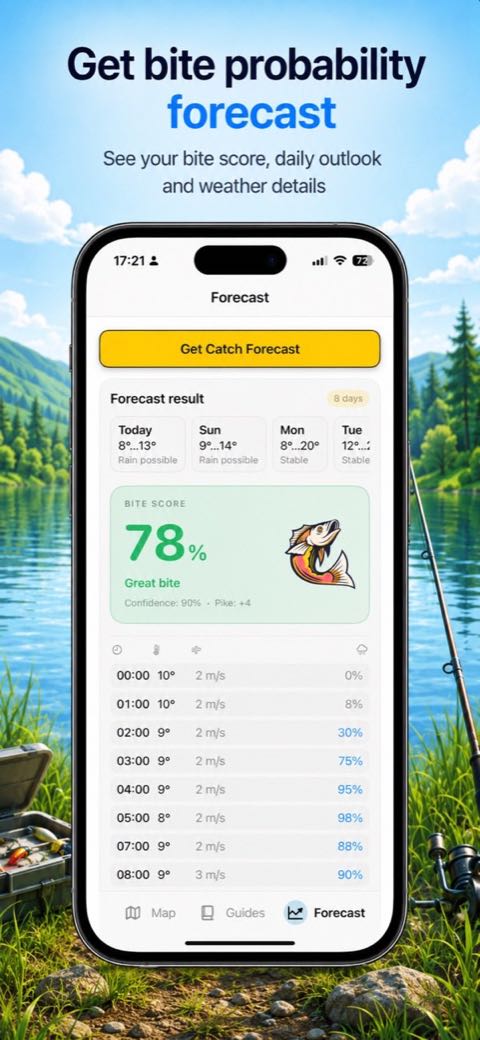
Pick a spot on the map, choose pike, perch or zander and get a bite score with an hourly outlook of temperature, wind and rain.

Free download. Requires iOS 17 or later.
Common myths
"Fish only bite at high pressure." There is no good evidence for a universal rule. Many anglers report the opposite for predators.
"Fish stop feeding when pressure falls." Pressure falls ahead of most fronts, and many anglers rate the hours before a front as some of the best.
"There is a magic number for pike." You will see numbers such as "29.9 to 30.3 inches" quoted online. Normal sea-level pressure is about 1013 hPa (29.92 inches), so these "magic" ranges simply describe normal, settled weather. The trend and the accompanying light, wind and temperature matter more.
Check the forecast
See how today's pressure and other conditions translate into a bite score in the Kyiv fishing forecast, or check any location in the app. For pike-specific timing through the year, see the pike fishing guide.