GetCatch
Pike Fishing Guide: When, Where and How to Catch Pike
Pike are ambush predators: they wait in cover and strike fast. Catching them consistently is mostly about being in the right place at the right time, then showing them a lure they can find.
On this page
Pike in a nutshell
The northern pike (Esox lucius) lives in lakes, slow rivers, reservoirs and backwaters across Europe, northern Asia and North America. It is a long, torpedo-shaped fish with a mouth full of sharp teeth, built for short, explosive attacks from cover. Pike eat mainly other fish, and large pike will take frogs, waterfowl chicks and small mammals.
Two consequences matter for anglers. First, pike are cover-oriented: weed beds, reeds, sunken trees and drop-offs are where they wait. Second, pike are visual hunters that also feel vibration through the lateral line, so lure size, action and contrast all count.
When pike bite: season and time of day
Pike are a cool-water species. They spawn very early in spring, in shallow, vegetated water soon after the ice goes, and their feeding through the year follows water temperature and light.
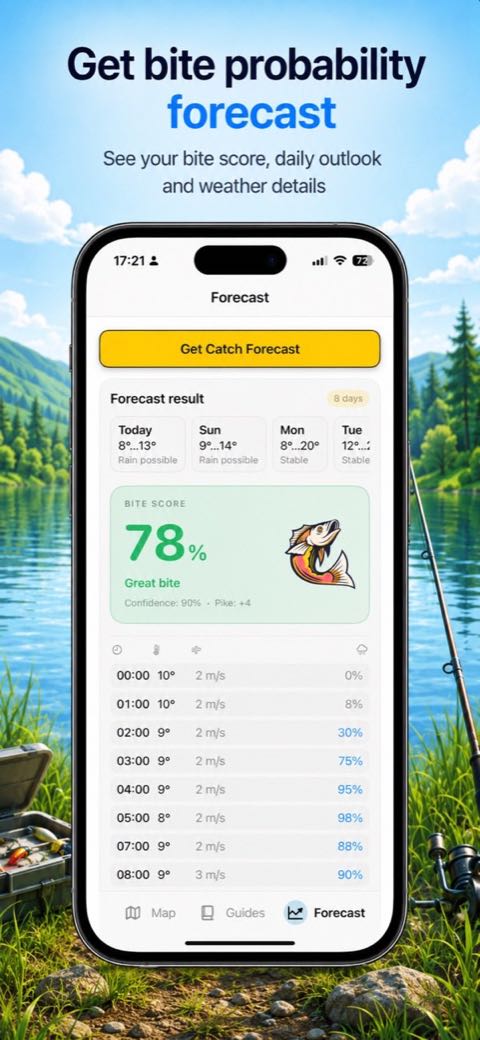
The GetCatch forecast adds or subtracts points for pike by season and time of day. The table shows the current values; positive means better than the weather alone suggests.
| Time of day | Spring | Summer | Autumn | Winter |
|---|---|---|---|---|
| Before dawn (03-06) | +6 | +4 | +4 | -6 |
| Dawn (06-09) | +14 | +8 | +12 | 0 |
| Morning (09-12) | +10 | +2 | +10 | +8 |
| Midday (12-15) | -6 | -10 | +2 | +10 |
| Afternoon (15-18) | 0 | -6 | +4 | +6 |
| Evening (18-21) | +8 | +4 | +8 | -2 |
| Night (21-03) | +2 | 0 | 0 | -8 |
Read it as a pattern, not a law:
- Spring: after spawning (and after any spawning-season fishing ban ends), pike feed hard in warming shallows. Dawn and morning are strongest.
- Summer: warm surface water pushes pike deeper or into thick weed. Early morning and evening beat midday.
- Autumn: the season many pike anglers wait for. As the water cools, pike feed actively for long stretches of the day. We cover it in depth in pike fishing in autumn.
- Winter: activity is lower, and the warmest hours around midday are usually best.
Weather shifts these windows. Cloud cover and a light wind often extend good fishing into the day; a bright, calm, high-pressure day after a cold front is often slow. See barometric pressure and fishing for what pressure does and does not tell you.
Where to find pike
Think like an ambush predator looking for cover next to food:
- Weed edges and gaps in weed beds, especially where weed meets deeper water.
- Reed lines, particularly on the windward side where baitfish gather.
- Bay mouths and channel entrances on rivers, where pike can sit out of the current and intercept fish moving in and out.
- Drop-offs and points, more so in late autumn and winter when pike move deeper.
- Inflows and structure such as fallen trees, bridge pillars and old jetties.
On big rivers like the Dnipro, the slack water of bays and side channels usually holds more pike than the main current. Our Kyiv fishing spots page shows which waters around Kyiv have pike reports.
Lures that catch pike
Pike will hit a wide range of lures. Four types cover most situations, and they are the same four the GetCatch guides recommend:
- Soft plastics (shads, paddle tails) on a jig head: versatile from shallow to deep, cheap to lose in snags.
- Wobblers and jerkbaits: strong visual triggers; suspending models paused near cover are deadly in cold water.
- Spoons: cast far, flash well, and work in wind and current.
- Spinners: easy to fish slowly in shallow water and around weed.
Match size to the season: smaller lures in spring when pike are recovering, bigger profiles in autumn when they feed on larger prey. Choose colour by water clarity and light; our lure colour guide has a simple chart.
Tackle basics
- Leader: always. Pike teeth cut ordinary line. Use a wire, titanium or heavy fluorocarbon leader.
- Line: braided line gives sensitivity and strong hooksets, especially with soft plastics.
- Rod and reel: a medium to medium-heavy spinning rod around 2.1 to 2.7 m with a 3000-size reel covers most bank fishing. Go heavier for big lures and lighter for small rivers.
- Tools: long-nose pliers or a hook remover, and a large rubber-mesh landing net.
Handling and release
Pike are tough-looking but sensitive to rough handling. Keep them in the water or on a wet mat, support the body horizontally (never hang a big pike by the jaw), unhook quickly with long pliers and let the fish recover before release. Barbless or crushed-barb hooks make this much easier.
Rules
Pike are protected during spawning in many countries, and size and bag limits apply. In Ukraine, check the current rules for your water with the State Agency of Melioration and Fisheries before you go.
Plan your next pike trip with GetCatch
Bite forecast tuned for pike by season and time of day, plus a map of real pike catch reports.

Free download. Requires iOS 17 or later.