GetCatch
Lure Colour Guide: Choosing Colours by Water and Light
Lure colour is not magic, but it does matter, mostly because it changes how visible your lure is. This guide gives you a starting chart and the reasoning behind it, so you can make your own decisions on the water.
On this page
The logic in three rules
- Visibility first. A predator has to notice your lure before it can strike. In clear water and bright light, almost any colour is visible. In coloured water or low light, contrast and brightness decide whether the lure is seen at all.
- Natural when they can see well, bold when they cannot. In clear water with good light, natural colours that look like local baitfish often get more confident bites. When visibility drops, bright, fluorescent or very dark colours stand out better.
- Silhouette in low light. At dawn, dusk and night, fish often see your lure from below against the sky. A dark lure gives the clearest outline.
The colour chart
This is the same chart that is built into the guides section of the GetCatch app.
| Water | Light | Depth | Try these colours | Why |
|---|---|---|---|---|
| Clear | Sunny | Shallow (0-2 m) | Red, orange, gold, copper | Bright colours imitate an injured baitfish near the surface. |
| Clear | Cloudy | Shallow (0-2 m) | Lime, fluo yellow, white, black | High contrast improves visibility in flat light. |
| Clear | Sunny | Medium (3-5 m) | Green, lime, yellow, pearl | Natural tones remain visible at mid-depth in clear water. |
| Murky | Cloudy | Medium (3-5 m) | Acid green, black with glitter, fluo, red | Acid colours cut through turbid water; glitter adds flash. |
| Clear | Any | Deep (5+ m) | Blue, light blue, white, fluo lime | Cool tones stay visible where warm colours fade with depth. |
| Dark or peaty | Cloudy | Deep (5+ m) | Black, purple, dark blue, red-black | A strong silhouette stands out against dark water. |
| Murky | Any | Shallow (0-2 m) | Orange, gold, lime, red-white | Contrasting, reflective colours work in moving murky water. |
| Any | Morning or evening | Any | Black, purple, dark green, white | Maximum contrast in low light; black is the classic dusk colour. |
Why colour changes with depth
Water absorbs light, and it absorbs some colours faster than others. Red light fades first, within the first few metres, followed by orange and yellow. Blue and green penetrate furthest in clear water. That is why a bright red lure can look dull grey at depth, while blue, white and chartreuse stay visible longer. In coloured water, all colours fade faster, so contrast matters more than the exact shade.
Species notes
Pike hunt by sight and vibration. In clear water, natural patterns such as perch and roach are a good default. In coloured water or low light, try chartreuse, fire tiger, orange or black. See the pike fishing guide.
Perch respond strongly to contrast and flash. Patterns with a dark back and a bright belly, orange accents and a bit of glitter are popular for good reason. See the perch fishing tips.
Zander often feed in low light and coloured water. Pale colours (white, pearl) and bright fluorescent colours are visible in those conditions, and dark silhouettes work at night.
How to test colours on the water
- Start with the chart, based on water clarity and light.
- Carry two extremes: one natural and one bright or dark. If the natural colour gets follows but no strikes, switch to the bold one, or the other way round.
- Change one thing at a time. If you change colour, size and retrieve at once, you will not know what made the difference.
- Record what worked. Note colour, water clarity and light in your catch journal. Your own data beats any generic chart within a season.
Colour is not the first thing to fix
If you are not getting bites, check location, depth and speed before colour. A perfectly coloured lure in empty water catches nothing. In autumn especially, slowing down and fishing closer to the bottom usually matters more than the shade. See pike fishing in autumn.
Take the guides to the water
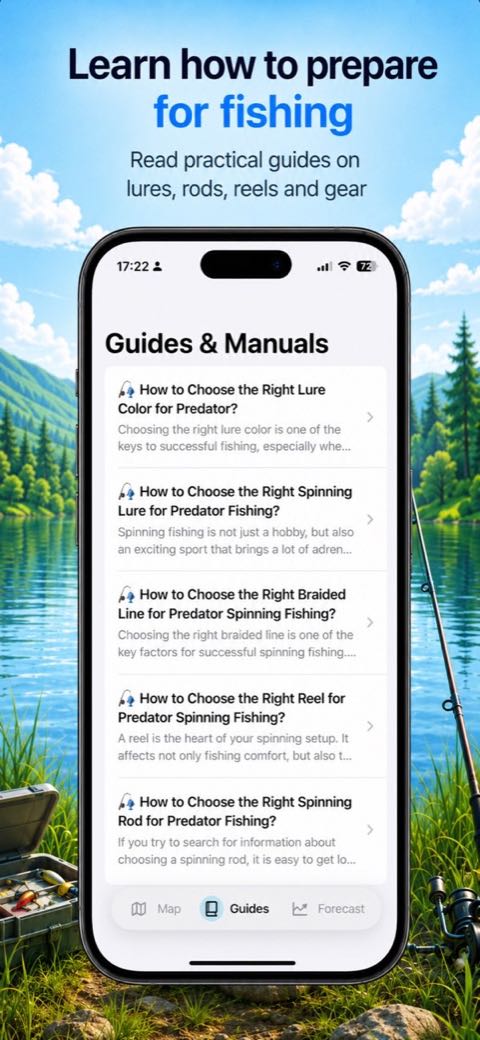
GetCatch includes practical guides on lure colour, lures, braid, reels and rods, next to your forecast and map.

Free download. Requires iOS 17 or later.