 GetCatch
Pike Fishing in Autumn: September to November Tactics
For many spinning anglers, autumn is pike season. The water cools, the weed dies back, baitfish gather, and pike feed to build reserves for winter. Here is how to make the most of it, month by month.
On this page
Why autumn is so good for pike
Pike are a cool-water fish. Summer heat makes them sluggish around midday and pushes them deep or into thick weed. As water temperature drops in autumn, they become more active for longer parts of the day. At the same time, baitfish gather in larger groups and the weed beds that hid both predators and prey thin out, so pike are easier to find.
It also shows in the data. On the GetCatch map, catch reports for the Kyiv area are concentrated in spring and autumn, and the forecast model gives pike positive adjustments for most daylight hours in autumn, strongest at dawn and in the morning.
Early autumn: September
Water is still relatively warm, and pike are often spread out along weed edges and in shallow bays.
- Where: outside edges of weed beds, reed lines, bays with baitfish.
- Lures: shallow-running wobblers, spinners and soft plastics on light heads, retrieved just over the weed.
- When: early morning and evening still beat midday on bright days.
Peak autumn: October
As the water keeps cooling and weed dies back, pike follow baitfish towards transitions: the mouths of bays, drop-offs next to shallow flats, points and channel edges. This is often the most consistent month.
- Where: the first drop-off off a shallow area, bay mouths on rivers, the outside of dying weed beds.
- Lures: bigger soft plastics (10 to 15 cm) on heavier heads, jerkbaits and suspending wobblers, medium spoons.
- When: fishing can be good through the whole day, especially under cloud. Dawn and morning remain the strongest windows in the GetCatch model.
Late autumn: November
Cold water slows pike down. Many move deeper and closer to wintering areas, and the best fishing gets shorter but can produce the year's biggest fish.
- Where: deeper holes and channel edges, slack water near the main current on rivers.
- Lures: soft plastics and jigs worked slowly near the bottom, suspending jerkbaits with long pauses.
- When: the warmest hours, often late morning to early afternoon, especially on calm, cloudy days.
Retrieve: slow down as the water cools
The most common autumn mistake is fishing too fast. As the water cools, pike will still chase, but not far and not for long.
- Add pauses. With jerkbaits and wobblers, a long pause after two or three twitches often triggers the strike.
- Stay low. In October and November, keep soft plastics close to the bottom with short lifts and controlled drops.
- Fish the drop. Many bites come while the lure is sinking. Watch the line and strike at any twitch or slack.
- Go bigger, not faster. A larger profile moved slowly offers a pike more food for less effort.
Weather and timing in autumn
Autumn weather swings quickly. Cloudy, mild days with a light wind, often ahead of a front, are classic pike days. The first clear, cold, bright day after a front is often harder; fish deeper and slower. Our guide to pressure and fishing explains why.
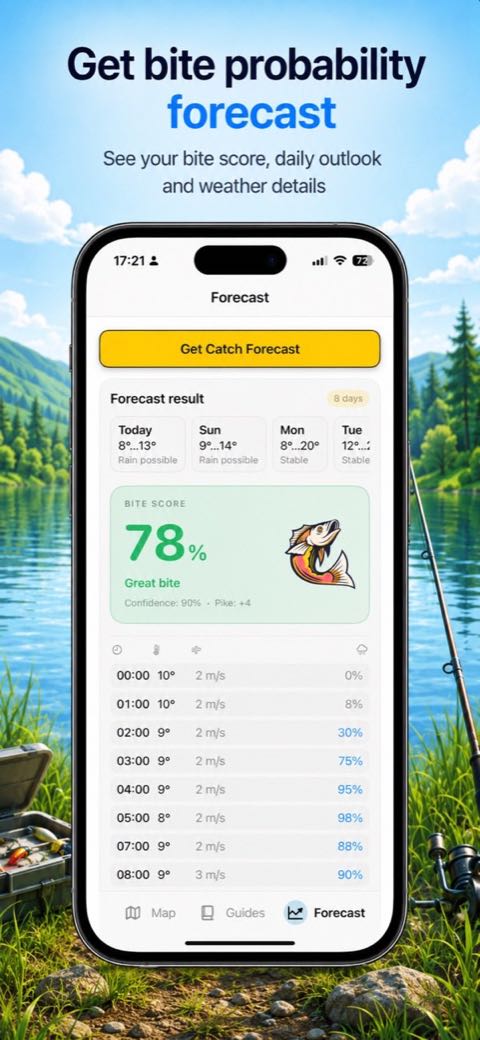
The Kyiv fishing forecast shows the pike score for the next three days with the best window, recalculated every morning.
Colour choices for autumn water
Autumn water is often clearer after the summer bloom ends, but rain and wind can colour it quickly. Natural colours (perch, roach, silver) work in clear water; bright or high-contrast colours stand out when the water is coloured and the light is low. See the lure colour guide for the full chart.
Plan your next pike trip with GetCatch
Bite forecast tuned for pike by season and time of day, plus a map of real pike catch reports.

Free download. Requires iOS 17 or later.
Safety in late autumn
Cold water is dangerous. Wear a life jacket on boats and slippery banks, carry dry clothes and let someone know where you are going. Days get short quickly, so plan to be off the water before dark if you are not prepared for night fishing.
Your autumn checklist
- Leader always on: pike teeth and bigger lures go together.
- A few large soft plastics, two or three jerkbaits and a spoon cover most situations.
- Check the pike guide for general behaviour and tackle.
- Check the current fishing rules for your water.
- Log every session, even blanks, to learn how your water changes through the season.