GetCatch
Zander Fishing: Conditions, Times and Lures That Work
Zander are the low-light specialists of European fresh water. If you fish at the times and in the places they hunt, they are very catchable; if you fish where and when pike feed, you will often miss them.
On this page
What makes zander different
The zander (Sander lucioperca), also called pikeperch, is a large predatory member of the perch family. It lives in big rivers, reservoirs, canals and large lakes across Europe and western Asia, and has been introduced to many waters outside its native range.
Zander have eyes adapted to dim light, with a reflective layer behind the retina that gives them their glassy look. That adaptation explains most of their behaviour: they prefer low light, coloured water and depth, and they often hunt actively at dusk, at night and on overcast days. They feed mostly on small, slim-bodied fish.
Best times for zander
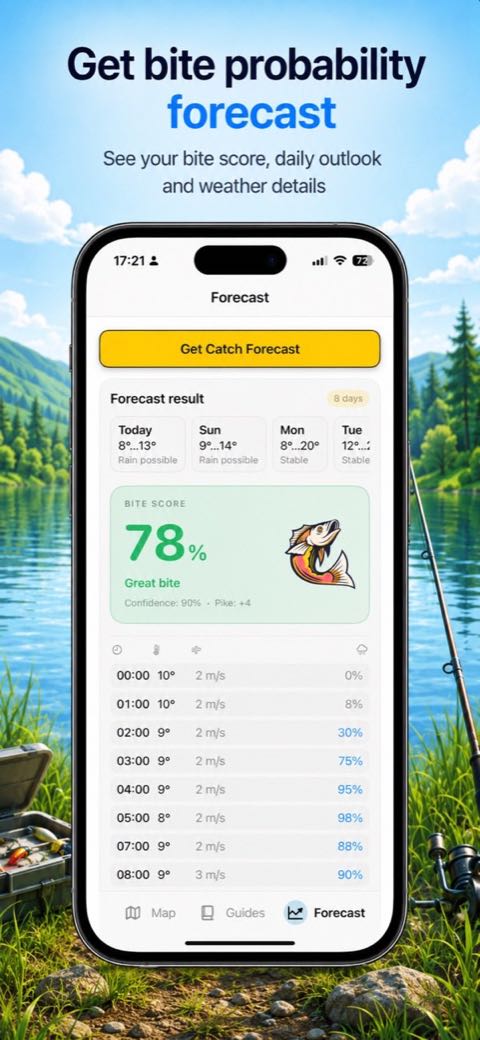
The GetCatch forecast gives zander a strong bonus around dusk, at night and before dawn, and a penalty in bright midday hours, except in winter when the pattern flattens:
| Time of day | Spring | Summer | Autumn | Winter |
|---|---|---|---|---|
| Before dawn (03-06) | +10 | +12 | +10 | +2 |
| Dawn (06-09) | +8 | +8 | +8 | +4 |
| Midday (12-15) | -8 | -10 | -6 | 0 |
| Evening (18-21) | +10 | +12 | +10 | +4 |
| Night (21-03) | +12 | +14 | +12 | +4 |
Conditions that often help:
- Overcast, dull days, which can extend low-light feeding into the day.
- Coloured water, for example after rain or in windy weather that stirs up a shallow reservoir.
- Wind blowing onto a bank, which pushes baitfish and colour towards it.
Bright sun and very clear water are the hardest conditions. On those days, fish deeper or wait for the evening.
Where zander hold
Zander like hard bottoms and depth changes: river channels, drop-offs, gravel and shell banks, sunken structures, bridge pillars and the edges of deep holes. In large rivers such as the Dnipro, look for places where current meets slower water, such as the downstream side of points and the edges of channel drop-offs. At night, zander often move up onto shallower flats to hunt.
Unlike pike, zander are less tied to weed. If you are catching only pike in weedy bays, move to harder, deeper ground for zander.
Lures and techniques
The GetCatch guides list soft plastics, jig heads, wobblers and spoons for zander, with soft plastics on a jig head as the core method:
- Jigging soft plastics along the bottom. Cast, let the lure sink to the bottom, then lift or reel two or three turns and let it fall again. Most bites come on the drop, so watch your line.
- Slim profiles. Narrow shads and worms of 7 to 12 cm match the slim prey zander prefer.
- Slow, deep wobblers at night. On flats after dark, a slow straight retrieve with a minnow-shaped wobbler can work well.
- Keep contact with the bottom. Choose a jig head heavy enough to reach bottom in the current, but no heavier.
Zander bites are often a light tap. Braided line and a sensitive rod help you feel them, and a firm hookset is needed for their bony mouths. Use a fluorocarbon leader; switch to wire or titanium where pike are common. For colour choice in coloured water and low light, see the lure colour guide.
Handling and rules
Zander are sensitive to being brought up quickly from deep water and to long periods out of water. Unhook quickly, keep the fish wet and release it promptly. Zander are protected during spawning in many places, and minimum sizes apply. In Ukraine, check the current rules with the State Agency of Melioration and Fisheries.
Plan around the light
Because zander depend so much on light, the time window you pick matters more than for perch or pike. Use the species tabs in the Kyiv fishing forecast to compare the evening window with the morning, and pair a zander evening session with a perch morning on the same trip.
Time your zander session with GetCatch
Zander bite forecast that accounts for dusk and night activity, and catch reports from anglers.

Free download. Requires iOS 17 or later.